Cracked Heels Before Summer: How to Fix Them Fast with Professional Heel Care
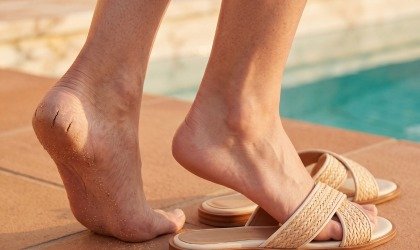
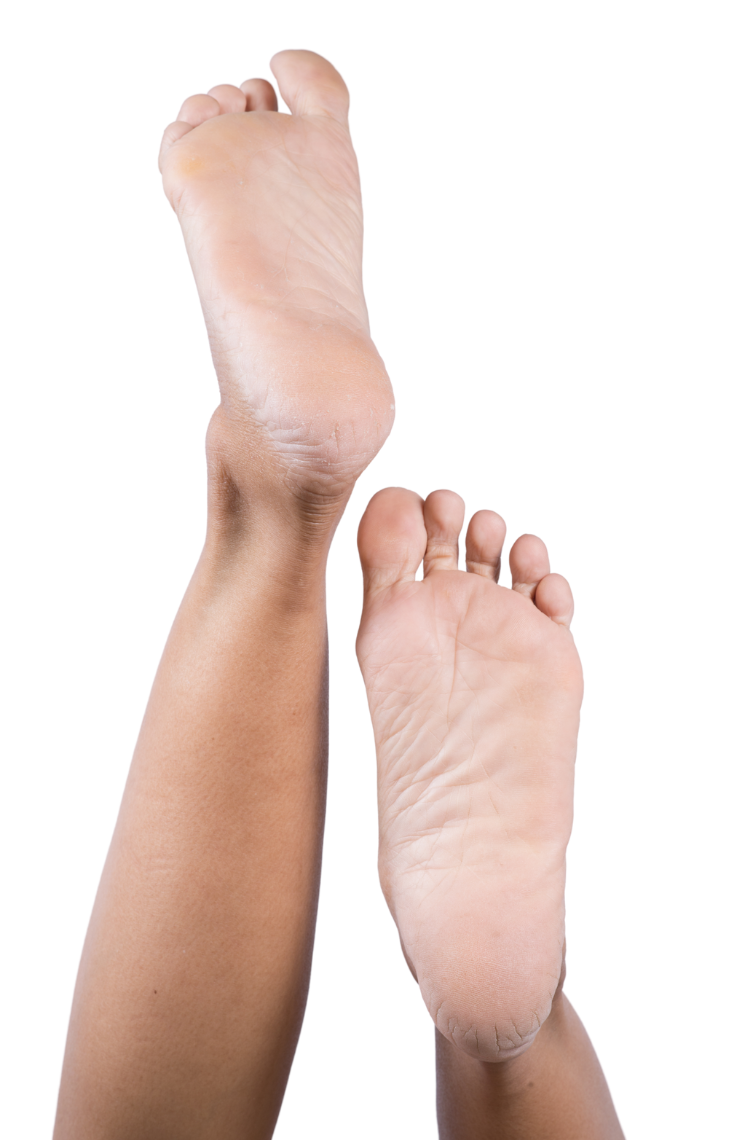
Cracked heels — medically referred to as heel fissures — happen when the skin around the rim of the heel becomes so dry and thick that it loses its ability to flex. When weight is placed on the heel, the hardened skin is forced outward and splits rather than stretching.
The most common causes are prolonged dryness, standing on hard floors for long periods, walking barefoot, wearing open-back sandals or flip-flops that allow the heel pad to spread sideways, and simply not moisturising the heel area regularly. For some people, underlying factors such as circulation issues or skin conditions can also contribute.
Why Summer Makes Cracked Heels Worse
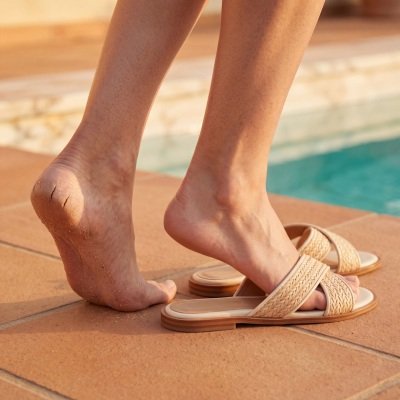
There is a real seasonal pattern to cracked heels — and summer is when most people first notice the problem. The shift to open-back sandals and flip-flops removes the support and containment that enclosed footwear provides. The heel pad can spread more freely with each step, increasing the lateral pressure that causes cracking.
Dry summer heat, walking barefoot on hot surfaces, and spending more time on hard outdoor ground all contribute to further drying the heel skin. Many people also reduce the frequency of moisturising in summer because they feel their skin is naturally less dry — but the heel area often needs more attention in warmer months, not less.
Why Pumice Stones and Heel Creams Are Not Enough
Heel balms, pumice stones, and foot files are useful maintenance tools — but they are not designed to treat established cracked heels. Once the hard skin has reached a significant depth and the cracks have developed, surface treatment simply cannot remove enough of the underlying callus to allow the skin to heal properly.
Attempting to file deep cracked heels at home also carries a real risk of removing live skin, causing soreness or small breaks in the skin that can become infected. A pumice stone does not discriminate between dead skin and healthy skin — and in the wrong hands, it can do more harm than good.
What Does Professional Heel Care Actually Involve?
At Harbour Foot Clinic, heel care treatment begins with a full assessment of the condition of your skin and heels. The depth of the cracking, the thickness of the surrounding callus, and the health of the surrounding skin are all evaluated before any treatment begins.
Treatment involves the careful, controlled removal of the thickened skin using clinical instruments — a process that is precise, safe, and pain-free when carried out by a trained foot health specialist. Unlike home tools, clinical instruments allow the foot care team to work right to the edge of healthy tissue without causing any damage.
Once the hard skin is removed, the underlying skin is treated and moisturised, and you will be given specific aftercare advice to help maintain the results at home between appointments.
Can Cracked Heels Become Dangerous?
For most people, cracked heels are primarily a discomfort issue. But in some cases, they can develop into something more significant. Deep heel fissures that bleed or remain open create an entry point for bacteria, which can lead to infection — particularly in anyone with reduced circulation or sensation in their feet.
Even for people without underlying health conditions, a deep cracked heel can become extremely painful to walk on and can affect day-to-day mobility. Treating heel problems at the first sign of worsening — rather than waiting until they become severe — is always the better approach.
How Many Appointments Will You Need?
The majority of people see a significant improvement in a single appointment. If the cracking is moderate, one treatment combined with a good at-home aftercare routine is often sufficient to resolve the issue and prevent it returning.
For more severe or longstanding cracked heels — particularly those that have been left untreated for many months — a follow-up appointment four to six weeks later is usually recommended. Your foot care specialist at Harbour Foot Clinic will give you a clear expectation at the end of your first visit.
What Should You Do Between Appointments?
After a professional heel care treatment, the most important thing you can do is moisturise consistently. A good-quality urea-based heel balm — applied daily to damp skin after showering — makes a significant difference to how quickly the skin continues to improve and how long the results last.
Wearing footwear with proper heel support rather than flat, open-back sandals will also help. Completely avoiding flip-flops and backless shoes is not realistic for most people during summer, but limiting barefoot time on hard surfaces and choosing sandals with a heel strap makes a noticeable difference.
What About Hard Skin on Other Areas of the Foot?
Hard skin is not exclusive to the heel. Calluses can build up on the ball of the foot, the sides of the toes, and along the outer edge of the foot — wherever pressure is concentrated. These areas can also become painful and, in some cases, can develop into corns.
A medical pedicure or routine foot care appointment at Harbour Foot Clinic addresses hard skin wherever it occurs on the foot, not just on the heel. If you have concerns about hard skin anywhere on your feet, your appointment is the right time to have them assessed.
Signs You Need Professional Heel Care
You should consider booking a professional heel care appointment if any of the following apply:
• Your heels have visible cracks that are deep, discoloured, or painful
• The skin around your heel feels hard and rigid rather than firm but flexible
• Your heels catch on socks or tights and snag the fabric
• You have been using heel creams and pumice regularly with little improvement
• Your heels are painful first thing in the morning or after being on your feet for long periods
• Any crack has bled, however slightly
Any of these signs suggest the cracking has progressed beyond what home care can effectively manage, and professional treatment is the appropriate next step.