Fungal Nails in Summer: Causes, Signs and When to Get Professional Treatment
A fungal nail infection occurs when fungal organisms — typically dermatophytes, the same group responsible for athlete’s foot — penetrate the nail and begin breaking down the keratin it is made from. The nail responds to this attack by thickening, changing colour, and eventually becoming brittle or crumbly.
Toenails are far more commonly affected than fingernails, because the feet spend more time in warm, enclosed environments where fungal organisms can thrive. The infection usually begins at the tip or side of the nail and progresses towards the base if left untreated.
Why Summer Increases the Risk
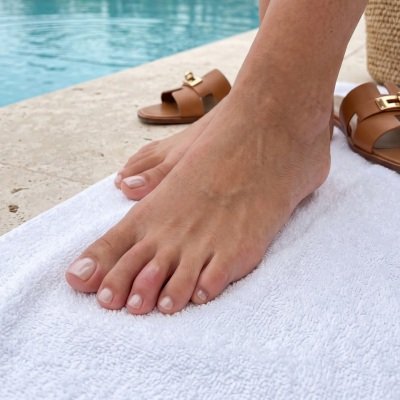
Fungal organisms need warmth, moisture, and a surface to colonise — and summer provides all three in abundance. Swimming pools, communal showers, gym changing rooms, and beach changing facilities are all environments where fungal spores are present and where bare feet are common.
The combination of bare feet on contaminated surfaces and warm, slightly damp conditions inside summer footwear creates an ideal environment for fungal infections to take hold. People who have had athlete’s foot — a fungal skin infection — are also at higher risk of developing a nail infection, as the fungus can spread from the surrounding skin to the nail.
What Does a Fungal Nail Actually Look Like?
The early signs of a fungal nail infection are easy to miss because they can look similar to minor bruising or discolouration from tight footwear. The most common signs include:
• A yellowish, white, or brownish discolouration, usually starting at the tip or edge of the nail
• Thickening of the nail — it may become difficult to cut or feel rougher in texture
• The nail becoming brittle, flaky, or crumbly at the edges
• A slight separation of the nail from the nail bed underneath
• A faint musty or unpleasant odour from the affected nail
• Debris building up under the nail
It is worth noting that not every discoloured nail is a fungal infection. Bruising from tight footwear, psoriasis affecting the nails, and other conditions can produce similar-looking symptoms. An assessment from a trained foot health professional is the most reliable way to identify what is actually happening.
Why Over-the-Counter Treatments Often Fail
The most widely available treatments for fungal nails are topical lacquers and nail patches, available in pharmacies without prescription. These products can be helpful in very mild, early-stage infections, but they have a fundamental limitation: they cannot penetrate the nail adequately to reach the fungal organisms embedded in the deeper nail plate.
Clinical studies consistently show low cure rates for topical treatments used alone, particularly in moderate to severe infections. Many people use these products for months — sometimes years — without seeing meaningful improvement. The infection continues to progress while the surface of the nail is treated, which is why professional assessment is so important.
Can You Still Wear Sandals with a Fungal Nail?
This is one of the most common questions we hear at Harbour Foot Clinic, and the answer is: it depends. In the very early stages, when the infection is confined to a small area of the nail tip, wearing sandals is not typically a problem. The nail should be kept clean and dry, and if you are attending a communal pool or changing room, covering the nail with a waterproof dressing is sensible hygiene practice.
In more advanced infections, where the nail has become significantly thickened, crumbly, or separated from the nail bed, professional treatment is really the priority — both for your own comfort and to prevent spread to other nails or to other people.
How Do Fungal Nail Infections Spread?
Fungal nail infections can spread from nail to nail on the same foot, to other toenails, and to the toenails of people who share the same living environment or footwear. The fungal spores that cause these infections are extremely hardy and can survive on surfaces for extended periods.
Shared towels, shared footwear, and walking barefoot on surfaces where an infected person has also walked barefoot are the most common transmission routes. This is particularly relevant in summer when communal facilities are used more frequently.
What Does Professional Fungal Nail Treatment Involve?
At Harbour Foot Clinic, fungal nail treatment begins with a thorough assessment of the nail or nails affected. The appearance, texture, and extent of the infection are evaluated to determine the most appropriate treatment approach.
Treatment typically involves reducing the thickness of the infected nail using professional instruments — removing the compromised nail material creates the best conditions for the nail to recover and allows any topical treatment to penetrate more effectively. Your foot care specialist will also provide clear guidance on at-home care, hygiene practices, and footwear choices to prevent reinfection.
In some cases, a clinical antifungal preparation may be recommended to use between appointments. Your foot care specialist will advise you on the most appropriate option based on the severity and duration of your infection.
How Long Does Treatment Take?
Honest answer: fungal nail infections take time to treat, because nail growth is slow. The infected portion of the nail needs to grow out and be replaced by healthy nail — and depending on the extent of the infection and how quickly your nails grow, this can take several months.
What professional treatment does is ensure the infection is properly managed throughout that process. Most people begin to see visible improvement within two to three months of starting consistent treatment. Regular appointments at Harbour Foot Clinic allow your foot care team to monitor progress, manage the affected nail, and adjust the approach if needed.
Can Fungal Nail Infections Be Prevented?
The risk of fungal nail infection can be significantly reduced with a few straightforward habits:
• Wear flip-flops or pool shoes in communal showers, changing rooms, and around swimming pools
• Dry your feet thoroughly after swimming or showering, particularly between the toes
• Change socks daily and choose natural, breathable materials when possible
• Keep toenails trimmed to a reasonable length and filed smooth at the edges
• Treat athlete’s foot promptly — it is one of the most common routes to nail infection
• Avoid sharing towels, socks, or footwear
If you notice any early changes to a toenail after a summer of communal pool use, do not wait to see if it improves on its own. Early treatment consistently produces better outcomes than waiting.