Foot Care During Pregnancy: Swelling, Nails and Staying Comfortable
Pregnancy changes almost everything, and your feet are no exception. Swelling, aching arches and shoes that suddenly feel a size too small are all common. By the third trimester, many women can’t see their toes, let alone reach them.
If you’re expecting over the autumn and winter months, you’ll also be spending more time in boots and warm socks, which brings its own challenges. Here’s how to keep your feet comfortable through every stage of pregnancy.
How Pregnancy Changes Your Feet
Looser ligaments. Pregnancy hormones soften the ligaments throughout your body to prepare for birth, and that includes your feet. Arches can flatten slightly, and your feet may get a little longer or wider. For some women, this change stays after the baby arrives.
Extra pressure. As your weight increases and your posture shifts, your feet take more load with every step. Aching heels and arches are very common, especially after a long day on your feet.
Fluid retention. Your body holds on to more fluid during pregnancy, and gravity sends a lot of it to your feet and ankles.
Swollen Feet and Ankles: What's Normal and When to Call
Mild swelling is normal, especially later in pregnancy and towards the end of the day. It usually eases overnight. To help:
• Put your feet up whenever you can
• Avoid standing still for long periods
• Keep moving with gentle walks
• Wear comfortable shoes that allow for swelling
• Drink plenty of water
Contact your midwife, GP or maternity unit straight away if you notice:
• Sudden swelling of your face, hands or feet
• A severe headache, changes to your vision, or pain just below your ribs
• Pain, warmth, redness or swelling in one leg only
These can be signs of conditions that need urgent medical attention, so don’t wait for your next appointment.
Nail Care When You Can't Reach Your Feet
Trying to cut your toenails at an awkward angle often means cutting them too short or down into the corners, which is one of the most common causes of
ingrown toenails.
If reaching your feet has become difficult, ask your partner to help, cutting straight across and not too short. Or let us take care of it: routine foot care or a
medical pedicure means your nails are trimmed and shaped properly, without the stretching.
Hard Skin and Heel Care
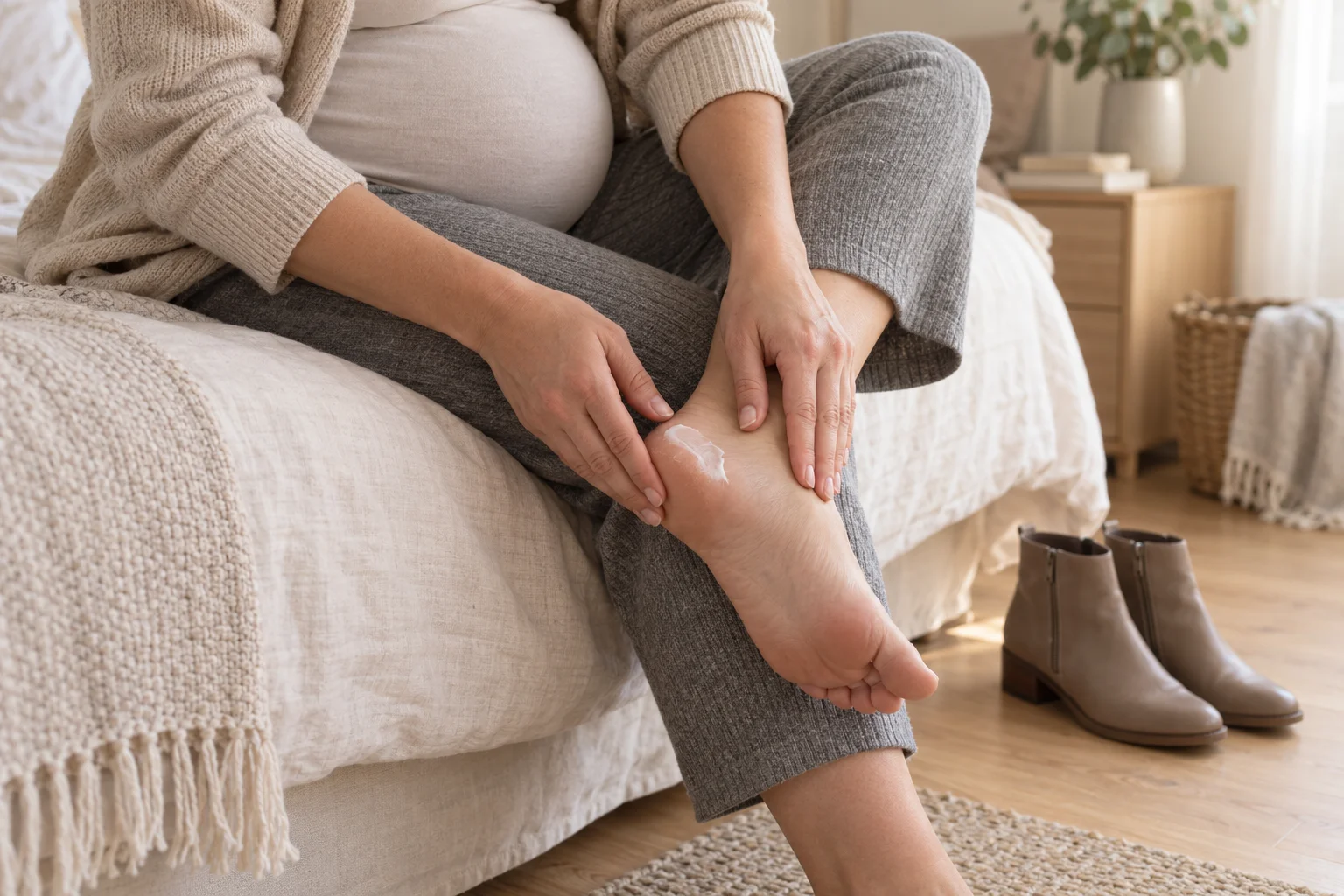
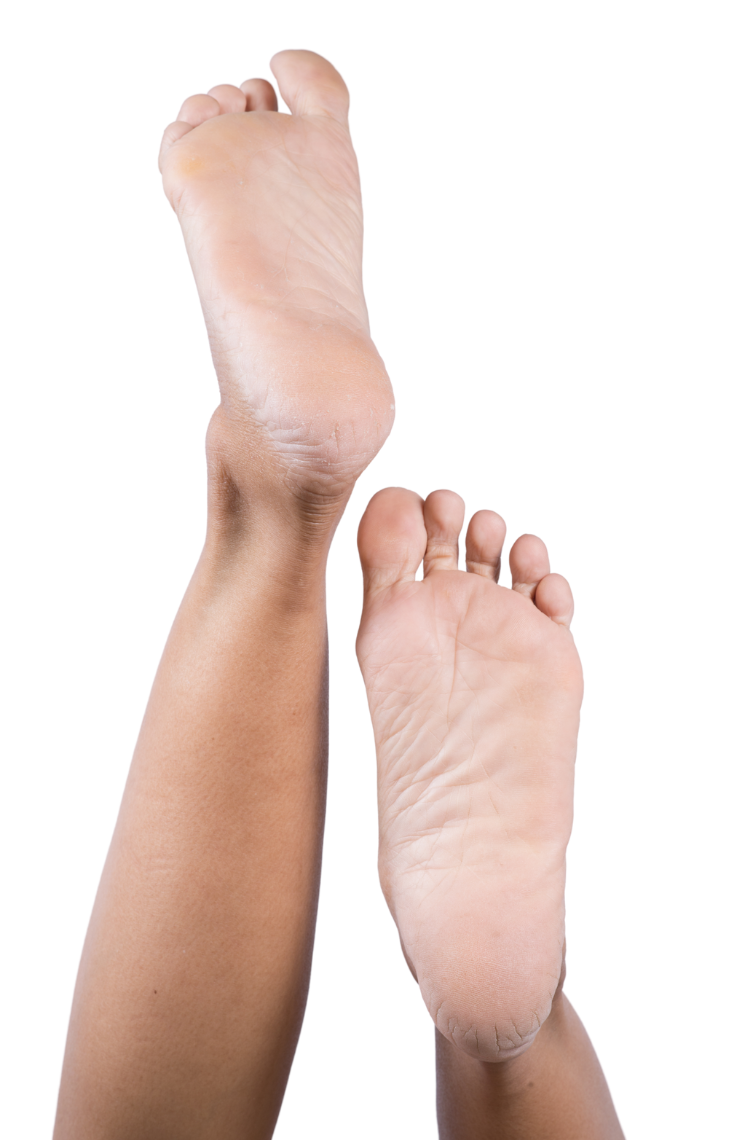
The extra pressure on your feet can cause hard skin to build up on your heels and the balls of your feet. Add central heating and colder weather, and heels can quickly become dry and cracked.
• Moisturise your heels every day, but not between your toes
• Avoid blades, graters and medicated corn plasters, which can damage healthy skin
• If the skin is already thick or cracking,
heel care gently reduces it so your moisturiser can work properly
Choosing Comfortable Footwear
• A low, supportive heel rather than completely flat shoes or high heels
• A cushioned sole to take some of the pressure off your heels and arches
• Adjustable fastenings, such as laces, straps or Velcro, so shoes can be loosened as your feet swell
• Autumn boots with a side zip, so you can get them on without bending too far
• Your feet measured again if shoes start to feel tight, as you may need a larger size for now
Booking Foot Care While Pregnant: What to Tell Us
Let us know you’re pregnant when you book and when you arrive, including roughly how many weeks you are. Also mention any pregnancy-related conditions, such as gestational diabetes, and any advice your midwife or GP has given you.
We’ll make sure you’re comfortable and well supported throughout your appointment. You can read more about
routine foot care on our website.
Book an Appointment
If your feet need some extra care during pregnancy, we’re here to help.
Book online or call us on 087 232 5143. Harbour Foot Clinic, Harbour St, Mullingar.